Tuesday, February 18, 2014

How is the federal government involved in the Common Core?

Three sets of laws prohibit the federal government from prescribing the content of state curricula and assessments, yet the Department of Education has done more than any other organization to propel the Common Core and is currently funding the creation of standardized assessments that are fully aligned with the Common Core.1
Triggering the Adoption
In March 2009, the Department of Education revealed its backdoor method of gaining federal control of state educational policy when Secretary of Education Arne Duncan announced the Race to the Top (RTTT) program—an opportunity for states to compete for a share of $4.35 billion reserved for state education incentives by the American Recovery and Restoration Act. To even be eligible for funding, states had to promise that they would fully adopt a set of common college- and career-ready standards supplemented with only 15% of their own standards.2 Applicants also had to demonstrate that they would expand their state’s longitudinal data system to be in the same format as other states and to contain new data including student health, demographics, and success in postsecondary education.3
Some states realized that RTTT was a dangerous expansion of federal control over education and declined to apply. On a 9–0 vote, the Kansas Board of Education decided not to apply for RTTT funding, saying, “The federal criteria required more centralized control of public school education…”4 Texas Governor Rick Perry explained to Secretary Duncan, “In order to submit an application that is preferred…for Race to the Top, Texas would have to commit…to the adoption of national curriculum standards and tests.”5
Not only did RTTT application criteria advance the Common Core, but application deadlines forced states to rashly commit to the standards. The first two states that received RTTT grants had to promise to adhere to the Common Core by January 19, 2010, without ever seeing the standards. The second wave of states saw the finalized standards, but these states were given a mere two months to evaluate the Common Core against their own state standards and outline a detailed plan for implementation. Nineteen states ultimately received RTTT grants.6 The Department of Education also used waivers for the most burdensome obligations under the No Child Left Behind Act (NCLB) to entice 38 states to implement college- and career-ready standards by the 2013–14 school year and use corresponding assessments by 2014–15.7
Supporters of the Common Core have emphasized that the Department of Education never specified that the Common Core was the “college- and career-ready standards that states needed to adopt.” But the connection with RTTT and the NCLB waivers is evident. Every state that has received an RTTT grant or NCLB waiver has adopted the Common Core and is a member of one of the two state consortia writing standardized assessments.8 The only exception is Virginia, which received an NCLB waiver after proving to the Department of Education that it had adopted “revised content standards that…are fully aligned with Common Core State Standards.”9
Though the last RTTT grants were awarded to states in late 2011, on August 6, 2013, the Department of Education announced the Race to the Top-District (RTTT-D) competition. The purpose of this program "is to build on the momentum of other Race to the Top programs by encouraging bold, innovative reform at the local level."10 Grants ranging from $4 million to $30 million are being offered to local education agencies (LEAs) in states that have adopted the Common Core. Applying LEAs must detail their efforts to institute rigorous teacher and principal evaluation systems, data systems that specifically connect individual teachers with individual students, and data systems that compile student-level data from preschool through higher education. Winners of RTTT-D will be announced in December 2013.11
Federally Funded Assessments
Since the early months of the Obama administration, Secretary Duncan has stressed the need for new assessments and student data systems to provide consistent accountability across the states. In April 2010, he announced another set of Race to the Top challenges: consortia of states boasting at least 15 members could receive part of $362 million to craft the assessments based on the Common Core.12 Applying consortia had to submit evidence from each member state that it would adopt standards “substantially identical across all States in [the] consortium,” fully implement whatever assessments were produced by 2014–15, and expand their its collection systems.13 In late 2010, two consortia were granted $170 million and $160 million to develop assessments for use in their 45 member states (combined total at the time).
Critics of the Common Core quickly noted that it was unclear who would evaluate the assessments and determine whether they actually aligned with the Common Core. The federal government answered this question by establishing a program officer in the Department of Education who has the power to redirect consortia activity if the “outcomes are inconsistent with the intended project outcomes.”14 Furthermore, in March 2013 the Department of Education created a technical review board to evaluate the assessments produced by the two consortia and “[identify] how we can better partner with the consortia during this critical development phase.”15
By dangling federal funds in front of the states in the midst of a trying recession, the federal government has circumvented the law and bound over 90% of the nation to following the same academic standards, using standardized assessments funded and reviewed by the Department of Education, and building the most expansive data systems in American history.
Document updated August 27, 2013

1 The General Education Provisions Act, the Department of Education Organization Act, and the Elementary and Secondary Education Act—as amended by the No Child Left Behind Act in 2001—specifically bar federal involvement in the details of education. See Robert S. Eitel and Kent D. Talbert, “The Road to a National Curriculum: The Legal Aspects of the Common Core Standards, Race to the Top, and Conditional Waivers,” A Pioneer Institute White Paper no. 81 (February 2012): 1.
2 Race to the Top Program Executive Summary (Washington, D.C.: U.S. Department of Education, November 2009), 4, accessed June 10, 2013, http://www2.ed.gov/programs/racetothetop/executive-summary.pdf ; Federal Register 74 no. 221(November 18, 2009): 59836, http://www.gpo.gov/fdsys/pkg/FR-2009-11-18/pdf/E9-27427.pdf.
3 Federal Register 74 no. 221(November 18, 2009): 59836, http://www.gpo.gov/fdsys/pkg/FR-2009-11-18/pdf/E9-27427.pdf ; A Blueprint for Reform: The Reauthorization of the Elementary and Secondary Education Act(U.S. Department of Education, March 2010), accessed June 10, 2013,http://www2.ed.gov/policy/elsec/leg/blueprint/blueprint.pdf .
4 Scott Rothschild, “Kansas Drops Out of ‘Race to the Top’ Education Competition,” The Lawrence Journal–World , April 13, 2010, accessed June 10, 2013, http://www2.ljworld.com/news/2010/apr/13/kansas-drops-out-race-top-education-competition/?kansas_legislature .
5 Rick Perry, Letter to the Honorable Arne Duncan , Office of the Governor, January 13, 2010, accessed June 10, 2013, http://governor.state.tx.us/files/press-office/O-DuncanArne201001130344.pdf .
6 “Race to the Top Fund—Awards,” U.S. Department of Education, June 10, 2013, accessed June 10, 2013,http://www2.ed.gov/programs/racetothetop/awards.html .
7 ESEA Waiver Flexibility Request , U.S. Department of Education, revised February 10, 2012, accessed August 27, 2013, available at http://www2.ed.gov/policy/elsec/guid/esea-flexibility/index.html .
8 See “Race to the Top Fund—Awards,” http://www2.ed.gov/programs/racetothetop/awards.html ; “ESEA Flexibility,” U.S. Department of Education, June 10, 2013, accessed June 10, 2013,http://www2.ed.gov/policy/elsec/guid/esea-flexibility/index.html .
9 Virginia Department of Education, ESEA Flexibility Request (Washington, D.C.: U.S. Department of Education, July 2012), 15, accessed June 10, 2013, http://www2.ed.gov/policy/eseaflex/approved-requests/va.pdf .
10 U.S. Department of Education, FY 2013 Race to the Top–District Executive Summary (Washington, D.C.: U.S. Department of Education, 2013), accessed August 20, 2013, http://www2.ed.gov/programs/racetothetop-district/2013-executive-summary.pdf.
11 “Race to the Top District (RTT-D),” U.S. Department of Education, last modified August 19, 2013, accessed August 22, 2013, http://www2.ed.gov/programs/racetothetop-district/index.html.
12 Federal Register 75 no. 68 (April 9, 2010): 18171, accessed June 10, 2013,http://www.gpo.gov/fdsys/pkg/FR-2010-04-09/pdf/2010-8176.pdf .
13 “Notice Inviting Applications,” Federal Register 75 no. 68 (April 9, 2010): 18171, accessed June 10, 2013,http://www.gpo.gov/fdsys/pkg/FR-2010-04-09/pdf/2010-8176.pdf .
14 Cooperative Agreement between the U.S. Department of Education and the Smarter Balanced Assessment Consortium and the State of Washington (Fiscal Agent) (January 7, 2011): 4, accessed June 10, 2013,http://www2.ed.gov/programs/racetothetop-assessment/sbac-cooperative-agreement.pdf .
15 “Performance—Race to the Top Technical Review,” U.S. Department of Education, March 2013, accessed June 10, 2013, http://www2.ed.gov/programs/racetothetop-assessment/performance.html ; for further information on the duties of the Technical Review Board, see Race to the Top Assessment Program: Technical Review Process(Washington, D.C.: U.S. Department of Education, April 2013), accessed June 10, 2013,http://www2.ed.gov/programs/racetothetop-assessment/technical-review-process.pdf .
http://www.hslda.org/commoncore/topic3.aspx

Does the Common Core have a philosophical bias?, Three threads of philosophy weave through the Common Core—statism, moral relativism, and progressivism,

he philosophy of any educational program can manifest itself in either its overall construct or the details of the curriculum—sometimes both. The most important features of the philosophy of the Common Core are revealed by observing its fundamental orientation rather than parsing the details of mathematics and language learning objectives.
Professor Charles Glenn of Boston University writes with keen insight into the goals of centralized education schemes:
How can the pluralism that we claim to value, the liberty that we prize, be reconciled with a “state pedagogy” designed to serve state purposes? Is there not wisdom in John Stuart Mill's remark that “all that has been said of the importance of individuality of character, and diversity of opinions and modes of conduct, involves, as of the same unspeakable importance diversity of education. A general state education is a mere contrivance for molding people to be exactly like one another…in proportion as it is efficient and successful, it establishes a despotism over the mind.1
Three threads of philosophy weave through the Common Core—statism, moral relativism, and progressivism, which are revealed both by what is proclaimed and what is omitted. The statist goals of the Common Core are implicit in the lockstep uniformity that is the central thesis of the program. All children in all states will learn the same content in the same manner so that the children may become useful workers. Traditionally, education has been premised on the notion that all education of value is designed to know truth that only can be fully known in God. The omission of the pursuit of truth as a core goal of the Common Core demonstrates its alliance with the dominant philosophy of modern education that there are neither absolute truths nor absolute values. Finally, we see progressivism in the view that all that is new is inherently superior to that which comes from prior generations of human knowledge.
The obvious influence of progressivism and relativism in the structure and goals of the Common Core reveals a view of education that is contrary to the desires of parents and educators who have chosen to pursue homeschooling, private schooling, and other forms of educational choice.
The story of progressivism in education begins with John Dewey. His influence over American educators surged in the 1960s and 1970s, and similarities between Dewey’s progressivism and the Common Core prove that Dewey’s thought still penetrates American educational philosophy. For example, Dewey advocated “schoolhouse experimentation,” meaning that educators should continually reject old methods in favor of new ones.2 The Common Core is this kind of schoolhouse experimentation.
“[The standards] are being imposed on the children of this nation despite the fact that no one has any idea how they will affect students, teachers, or schools,” liberal historian Diane Ravitch warns. “We are a nation of guinea pigs.”3
Dewey also argued for standardized curriculum to prevent one student from becoming superior to others and to train all students “for leadership as well as obedience.”4 Dewey envisioned a workforce filled with people of “politically and socially correct attitudes” who would respond to orders without question.5 Workforce readiness is the goal of the Common Core, and Dewey would have applauded the replacement of man “with something more convenient to social planners, more manageable,” as Dr. Anthony Esolen of Providence College described it.6
Relativism’s influence is evident in the Common Core’s open-ended, research-based assessment questions and expansive new data systems. In the late 1900s, Howard Gardner’s theory of multiple intelligences injected relativism into the philosophy of education.7 Contending that children have different cognitive strengths and styles, Gardner echoed Dewey’s assertions that children’s differing experiences eliminate objectively right answers.8 Gardner further argued that it is “unfair” to expect all children to answer the same question in the same way. He called on educators to reject standardized tests designed to measure proficiency according to “logic and mathematics” and substitute assessments that elicit the differences between children’s intelligences.9
Since the Common Core was first announced, the government’s rhetoric has been dominated by the jargon of “assessments” instead of “standardized tests.” The new requirement of using open-ended questions on standardized assessments is a direct result of Gardner’s relativism.10 Gardner also argued for comprehensively tracking student performance so that methods of instruction can be adjusted and students can be matched with jobs suited to their intellectual tendencies.11 The Department of Education’s emphasis on enlarging data systems and replacing teacher-student interaction with advanced computer-assisted learning stems from Gardner’s philosophy.
The progressive and relativistic idea that the purpose of education is merely for all students to study a specific set of material, show growth by typing narrative answers on assessments, and grow up to be productive members of the workforce must be refuted. Progressivism and relativism serve as the means of achieving the goal of a citizenry with a statist orientation.
America rose to greatness when education was utterly decentralized and widely considered to be beyond the competence of government. One might reasonably wonder why educational planners do not consider a return to that which has proven successful in the past rather than pursue a trend of their own making. This is especially inexplicable in light of the contemporary success of the homeschooling movement, which is both entirely individualistic and dominated by more traditional approaches to educational goals and content.
The philosophy of the Common Core is not revealed in the individual standards. Many forms of education would result in the acquisition of similar individual items of knowledge and skill. The philosophy that is antithetical to many is revealed in the broad purposes and the coercive uniformity of the Common Core.
http://www.hslda.org/commoncore/topic4.aspx

Friday, February 14, 2014

Liberal Constitutional Professor: 'Framers Would be Horrified' at Obama'...


Published on Feb 13, 2014
Respected liberal professor Jonathan Turley tells Megyn Kelly of FOX News that while he agrees with some of Obama's policies, his expansion of executive power is extremely dangerous and violates constitutional checks and balances. Turley is amazed that there is no pushback from the Democrat Party.

Awesome: Pro-Life Feminist Group's Response to Planned Parenthood's "What Women Need" Video

On Monday, Planned Parenthood's president Cecile Richards tweeted a Vine that supposedly showed "what women need" for Valentine's Day. According to Richards, one of the things that women "need" for the holiday is "safe + legal abortion."
New Wave Feminists, a group of self-described "badass pro-life feminists," took offense to Richards' claim that women need abortions for Valentine's Day, and instead launched their own counter campaign to show "What Women REALLY Need."
Here are a few highlights:
1. "Non-violent options for an unplanned pregnancy"


2. "To know they are strong enough to choose life!"


3. "...resources to be empowered to make non-violent choices"


4. "The truth: abortion hurts. Forever." 

5. "A pregnancy care center in place of every Planned Parenthood."


6. "Real men! Who will always love + protect them and their children"


7. "Prenatal care (which Planned Parenthood does not provide)"


8. "The right to life"

Kudos to New Wave Feminists for this awesome rebuttal and for showing that pro-life feminists are not mythical creatures.

Walgreens Just Fired This Man Because He Refused To Kill Babies.

The pro-abortion movement has become so powerful in America that adherence to its murderous tenets is now apparently more important than the constitutionally guaranteed right to free religious exercise. This tragic point was illustrated in the recent termination of a Walgreens pharmacist whose Christian faith prevented him from distributing abortifacient drugs to pregnant women.


Hall, who entered the medical field with the intention of sustaining and improving life, found out last August that he was being fired for trying to do exactly that. Despite six years of stellar reviews from his employer, Walgreens suddenly demanded he violate his values and sell the Plan B abortion pill. The company reportedly severed ties with him after he pointed out the fact that his faith had been accommodated in the past regarding this particular drug.


Since 2007, Hall had been permitted to transfer such requests to another pharmacist. When the FDA removed the prescription mandate for Plan B last year, however, such concessions were no longer available; and he had to choose between his job and his faith. Despite the incredible financial hardship it caused, he chose the latter.

The Thomas More Society, along with attorney Larry Crain, is coming to his aid with a federal lawsuit aimed at rectifying this tragic situation. We are proud to join in the effort with a petition and Facebook page dedicated to reinstating Hall to a position for which he was unquestionably well-qualified.

Americans have the right to live according to their sincerely held religious beliefs,” Crain explained, “and not be forced to participate in actions that they deeply and sincerely believe are morally wrong.”
According to the suit, Hall lost his health insurance and was forced to spend much of his retirement fund to survive three months between jobs. He was also reportedly denied unemployment benefits and was ultimately forced to accept a job with a 120-mile daily commute.

Thomas More Society attorney Jocelyn Floyd said Hall’s termination was illegal, “especially after six years of settled store practices showed that Walgreens could reasonably accommodate Dr. Hall’s religious beliefs with no difficulties.”

In support of Hall, and the beleaguered pro-life movement as a whole, you can voice your outrage and add your name to our petition by clicking here. You can join us in demanding Hall be reinstated – along with a formal apology – or send Walgreen’s a clear message that there are other pharmacies that would be happy to take your business.

We have also established a Facebook page that will provide updates in his appeal and allow users to express encouragement in their own words. Be sure to “like” the page below to receive the latest news.

Read more at http://www.westernjournalism.com/walgreens-just-fired-man-refused-kill-babies/#HtkjSqFZc2PHjZzS.99

Thursday, February 13, 2014

ANOTHER impossibly stupid Common Core worksheet sure to make your kid a moron., This one is being inflicted on America’s third graders.

Common Core Twitter screenshot/SHERRI C  
Here is the latest in a long line of frighteningly stupid Common Core math worksheets to bubble up courtesy of Twitter, according to Twitchy.


This one is being inflicted on America’s third graders.
As Twitchy notes, this flawed “front-end estimation” method wasn’t invented by the people behind Common Core. The concept — which refers to the correct answer to an addition problem as merely “reasonable” and allows students to be off by over 22 percent in their estimation — has been around for decades.
At the same time, the methodology is aligned with the Common Core State Standards Initiative, which attempts to standardize various K-12 curricula around the country.
This math lesson is just one more in the constantly burgeoning inventory of hideous Common Core math problems.
This particular math problem is strangely reminiscent of the video The Daily Caller exposed over the summer showing a curriculum coordinator in suburban Chicago perkily explaining that Common Core allows students to be totally right if they say 3 x 4 = 11 as long as they spout something about the necessarily faulty reasoning they used to get to that wrong answer. (RELATED: Obama math: under new Common Core, 3 x 4 = 11 [VIDEO])
Earlier this month, a group of Common Core-aligned math — math — lessons oozed out of the woodwork which require teachers to ask students if the 2000 presidential election was fair and which refer to Lincoln’s religion as either “liberal” or nothing. (RELATED: Common Core MATH lesson plans attack Reagan, list Lincoln’s religion as ‘liberal’)
Recently, The Daily Caller also brought you a surreal, subtly cruel Common Core math worksheet. (RELATED: This Common Core math worksheet offers a glimpse into Kafkaesque third-grade hell)
A few weeks ago, there was a set of incomprehensible directions for nine-year-olds. (RELATED: Here’s another impossibly stupid Common Core math worksheet)
In December, Twitchy found the most egregiously awful math problem the Common Core had produced yet until that point. (RELATED: Is this Common Core math question the worst math question in human history?)
In November, Twitchy collected several more incomprehensible, unintentionally hilarious Core-aligned worksheets and tests. (RELATED: EPIC FAIL: Parents reveal insane Common Core worksheets)


Read more: http://dailycaller.com/2014/02/12/another-impossibly-stupid-common-core-worksheet-sure-to-make-your-kid-a-moron/#ixzz2tEQ22bPA

Tuesday, February 11, 2014

The Glenn Beck Program: Common Core and Education

THE IMPACT OF COMMON CORE STANDARDS ON HOMESCHOOLERS

Though some Americans may assume that the Common Core State Standards will only affect children attending public schools, those in private, faith-based, and homeschooled education could experience the impact of the new initiative eventually.

The Home School Legal Defense Association (HSLDA), a nonprofit advocacy organization that defends and advances the constitutional right of parents to direct the education of their children, believes that Common Core interferes with that right. It has now joined with other groups in efforts to uphold education freedom and defeat the new standards legislatively.
Though the specific provisions of Common Core only directly affect public schools, HSLDA states that the initiative’s current impact on homeschooling and private education “is revealed in the expanding state longitudinal databases, shifting college admissions expectations, newly updated curricula, and revised standardized tests.”
William A. Estrada, Director of Federal Relations at HSLDA, spoke with Breitbart News about how Common Core will affect homeschoolers and how his organization is addressing the impact.
“In a nutshell, we’re very concerned about tests like the ACT and SAT being aligned to the Common Core, the potential for colleges and universities to require applicants to have gone through a Common Core-aligned K-12 education, and the danger of homeschool students being included in Common Core databases,” Estrada said.
Looking ahead, however, Estrada said that HSLDA is concerned with “the potential down the road for policy makers to say, ‘All students in America are taught the Common Core and take Common Core tests, so why aren’t homeschooled and private school students receiving the same education?’”
As the HSLDA website indicates, Achieve, one of the primary organizations evaluating the Common Core, is urging colleges and universities to revise their curricula, as well, to create “seamless transitions” from K-12 to post-secondary schools.
According to Implementing the Common Core State Standards: An Action Agenda for Higher Education, of which Achieve was a sponsor:
As high schools align their curricula to the CCSS, higher education institutions will face questions about their own courses. Will students who successfully complete a college-ready curriculum transition seamlessly into first-year college courses? Do those courses assume mathematics or English language arts knowledge and skills that are not part of the CCSS? Do curricula for relevant remedial and adult education courses align to the common core?
As HSLDA observes, this “seamless transition” is already taking place in Illinois, where the “State Board of Education emphasized the need to seamlessly connect high school and college education by streamlining the curriculum taught to high school seniors and college freshmen according to the Common Core”:
Though Illinois encouraged state universities to share with state high schools what kind of material students will be expected to know in their first year of college, nothing indicates that homeschools or private schools would be privy to the same information. This movement to standardize post-secondary academic standards reveals that the Common Core’s emphases and methods will permeate American education beyond elementary and secondary public schools.
“If the Common Core does become a national curriculum for every student in America,” Estrada explained, “the pressure will one day build to where laws may be passed requiring homeschoolers to conform their education to the Common Core.”
Breitbart News asked Estrada why, with serious concerns about loss of control over education choices and parent involvement in education, parents and other citizens have only just recently begun to express their outrage about Common Core.
“We believe that this is just the beginning of the outrage, “ said Estrada, “and HSLDA and many others are continuing to expose the dangers and problems of the Common Core.”
Over the next couple of months, HSLDA will release a groundbreaking documentary that explores both sides of the controversy surrounding the Common Core State Standards.
A shortened version of the documentary, entitled Building the Machine, will be released in February, online and free of charge, and the full feature will be released on DVD in late spring.
Asked how homeschooling families are responding to possible threats to education freedom, Estrada told Breitbart News, “We are fighting alongside public school parents against this takeover of education. Even though homeschoolers and private schools are currently exempt from the Common Core, we know that top down education approaches are bad for children, and bad for freedom.”
http://www.breitbart.com/Big-Government/2014/01/10/How-Will-Homeschoolers-Be-Affected-By-the-Common-Core-Standards

BUILDING THE MACHINE (2014) - Official Trailer [HQ] Stop Common Core


Published on Dec 10, 2013
http://www.commoncoremovie.com - Releasing ONLINE for FREE, February 2014 (30 min). Full Documentary (approx. 70 min) will release on DVD, late spring 2014.

Stay tuned for more sneak previews in upcoming weeks as we explore both sides of the Common Core State Standards initiative controversy. In the documentary, both proponents and opponents will present their perspectives so that you can draw your own conclusions on this important educational issue.

Monday, February 10, 2014

Help! We need a translator for this Common Core ‘math’ problem, How bizarrely complex can Common Core make simple arithmetic for America’s children?

14-8 Twitter/Ric the Magnificent  
The latest overly complicated Common Core math worksheet to bubble up courtesy of Twitter is being inflicted on first graders, according to Twitchy.


Here’s a rotated version, which makes it easier to read (but not easier to understand):

here it is, in all its convoluted intricacy:

rotated common core math problem
This first-grade math problem was brought to you by — surprise! — Houghton Mifflin Harcourt.Sigh.
Here it is, in all its convoluted intricacy:


The problem comes from textbook behemoth Houghton Mifflin Harcourt.
The problem appears to ask how to take 8 things away from 14 things, and is as hopelessly snarled for America’s six-year-old kids as that process could possibly be.
Parents aren’t too happy.


This complicated math lesson is just one more in the ever-growing inventory of sad and hideous Common Core math problems.
Just this week, a group of Common Core-aligned math — math — lessons oozed out of the woodwork which require teachers to ask students if the 2000 presidential election was fair and which refer to Lincoln’s religion as either “liberal” or nothing. (RELATED: Common Core MATH lesson plans attack Reagan, list Lincoln’s religion as ‘liberal’)
Also just this week, former Massachusetts education secretary Paul Reville berated Common Core critics and asserted that “the children belong to all of us.” (RELATED: Pro-Common Core panelist: ‘The children belong to all of us’)
Recently, The Daily Caller also brought you a surreal, subtly cruel Common Core math worksheet. (RELATED: This Common Core math worksheet offers a glimpse into Kafkaesque third-grade hell)
A few weeks ago, there was a set of incomprehensible directions for nine-year-olds. (RELATED: Here’s another impossibly stupid Common Core math worksheet)
In December, Twitchy found the most egregiously awful math problem the Common Core had produced yet until that point. (RELATED: Is this Common Core math question the worst math question in human history?)
In November, Twitchy collected several more incomprehensible, unintentionally hilarious Core-aligned worksheets and tests. (RELATED: EPIC FAIL: Parents reveal insane Common Core worksheets)
Over the summer, The Daily Caller exposed a video in which a curriculum coordinator in suburban Chicago perkily explained that students can be totally right if they say 3 x 4 = 11 as long as they spout something about the necessarily faulty reasoning they used to get to that wrong answer. (RELATED: Obama math: under new Common Core, 3 x 4 = 11 [VIDEO])


Read more: http://dailycaller.com/2014/02/08/how-bizarrely-complex-can-common-core-make-simple-arithmetic-for-americas-children/#ixzz2swxN6YcE

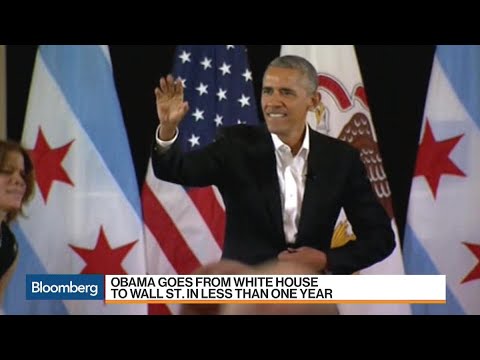
Obama Cashes In on Wall Street Speeches